On Impermanence
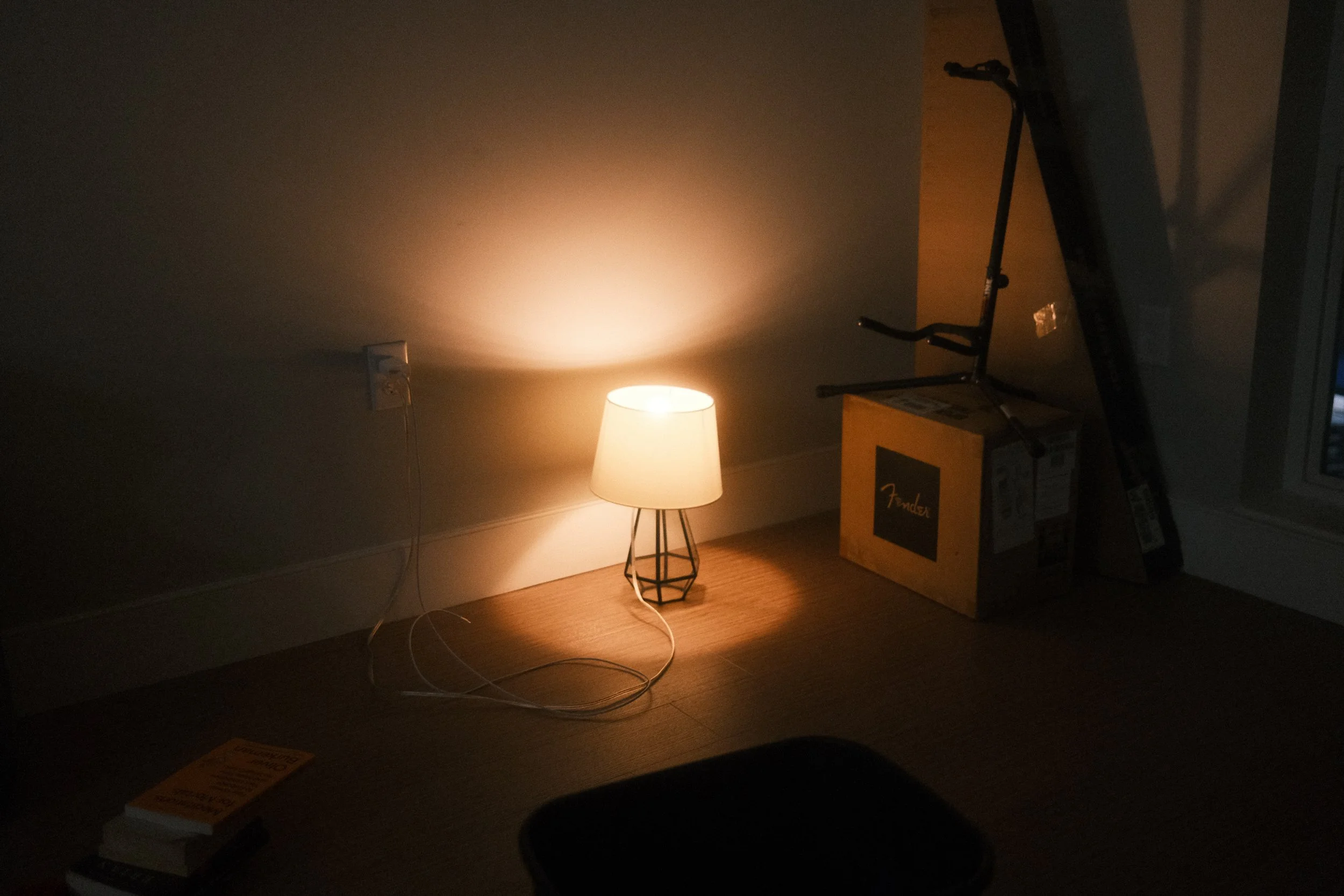
For the past 16 years, photography has been a constant in my life. I first picked up an old Canon camera from my dad, who had been an avid photographer himself since he was younger. He brought it on our trips across the world, as well as every birthday my brother and I have ever had. So growing up, I always had a record of when something happened, what it looked like when it did, who was there, etc. It was almost easy to just forget that something happened because it was just easier to find the photo album–or now–go to Google Photos and flip through the years. To him, and to my uncles, it was all about capturing memories, capturing the moment of our family standing in front of a sign that showed where we were. When cameras were still mostly film, every picture had to be perfect. They were directed, composed, counted down, and my dad made sure that everyone was ready at the moment the shutter was going to open and close as he only had one or two chances before he ran out of film. Which was an art in itself, a skill; to compose, to expose, to direct. Naturally, as the digital era of photography came about, it became less important to take one best photo at every point of interest. Instead, suddenly there were at least 10 photos at every point of interest and every point in between!
Then, I picked up a camera myself, my dad’s old Canon EOS 500D. Oh how cool I felt bringing my own camera for a trip for the first time. We were on a trip across Europe and I was only 10 years old. Frankly, I don’t remember much of the trip or have any idea where my pictures went. But I did remember how I felt. How I felt when I took a photo that I thought was cool, how it felt to carry that camera around and take photographs of my family, smiling in front of the camera while I smiled behind it. Pictures of the landscape on our bus rides, every toilet stop, every sign I saw. I wanted to capture everything because I wanted to remember everything. Though I still don’t know where those pictures are now, some maybe lost in a corrupt hard drive or even still in that old camera. But I kept at it. I kept bringing the camera everywhere and I was passionate. And at some point, my dad became too lazy to bring his own and put me in charge of bringing his, the newer Canon 5D, ahead of its time. So, it was up to me to make sure that all the important moments of our lives were captured, but along the way, it just didn’t feel as exciting anymore.
When I look back at the first few years of my photography career, when I look at the photos that I took, I try to remember how that moment felt. Not necessarily what it was or where it was. And I’ve sort of taken this along with me when I moved to Boston for school. Whenever I felt homesick, I looked through pictures of being home, pictures of my room, my dogs, trying to feel that familiar feeling. And for a while, I took a break from photography. I had my own camera at that point, the Sony A7III, a camera that I got for my 18th birthday and was ecstatic for. But for some reason, I didn’t have the same excitement for photography. Nothing felt exciting to take pictures of, not much felt cool enough for a picture with a full frame camera, and I thought “My phone was enough.” Only, it wasn’t. There’s something hollow, something empty and missing about seeing a screen and tapping that said screen, and just continuing about my day.
I didn’t feel as present in the moments that passed and I didn’t feel as engaged when trying to preserve anything from a phone. Most people think otherwise actually, that the less you care about the quality of the pictures you take, the more present you are in the moment because the less worried you are about making sure you get a good photo. But to me, the phone feels hollow because I realized that photography isn’t about the resulting image. It’s about forcing myself to pay attention to the world, noticing the beauty in the mundane, thus making me more present.
And so for the past couple of years I’ve chased that feeling, or rather, chased to preserve the feelings of my past. Through trips, moments with friends, mundane afternoons, quiet evenings. Photography, my cameras, my lenses, are all just mechanisms and tools. And truthfully, I don’t believe it’s about photography at all, but it’s about time. And how it’s constantly fleeting, how it never stops. As I grow up, the more I feel and recognize that. As I grow up and the more I deal with grief and loss, I’ve noticed it more. Maybe I’m just more sensitive to it, or I could just be in my head about it. Either way, it keeps me in check. It makes me want to preserve the moments that I live through, cherishing it’s impermanence. Ironically–and obviously–it became harder for me to let go. I couldn’t move past the highs of my joys and the lows of my struggles, because the pictures eternalized them. It’s self-conflicting, sure. That’s why for some people, deleting a picture of a moment you want to forget actually helps. I’m personally not a photo-deleter, there’s not a lot of things I want to forget. After all, you only ever live in that box of time that you’re in, and as more moments pass, everything becomes sacred.
Another perspective I’ve recently discovered is also how photography has similar themes to mortality. It follows what I was saying about preserving a moment that’s lost, each photograph just becomes a reminder of all the moments that have passed. Whether it’s of the summit of a difficult mountain, or a place you finally get to visit, or a really fun get together with your friends. Each photograph becomes a memory of grief, something to mourn, a moment in time that has passed. Then again, it may not be that serious. Roland Barthes once said that “The Photograph does not necessarily say what is no longer, but only and for certain what has been.” Any moment that anyone experiences can involve multitudes of emotions: joy, sadness, anxiety, curiosity, and any sensation one can feel. So, even if a photograph is an artifact of something that is lost, it may not always be as depressing as I’ve portrayed.
In any case, I struggle with this a lot. I tend to become too sentimental over a moment, that I never want to let go of it. And the pictures I have taken instead become a crutch for me. A place where I can enjoy the detached happiness from the pain of loss while I search for the next thing.
As it is though, this is why I take photographs. Because I want to remember how each moment felt, I want to remember the version of me that existed, the feelings that I felt, the way the sun or the rain felt on my skin. Moments will disappear, people leave, cities change, cars get sold, college ends, and life goes on. Photography becomes my attempt to hold on to something that is constantly sweeping away. To hold on to the meaning of the moment instead of the what in that moment. A photograph can always show me a mountain, or a street, a friend, a place, but it can’t always show me the excitement, or loneliness, or anything metaphysical from the moment, at least not directly. Yet, I’m going to keep chasing that and I’m going to try anyway. A photograph is my attempt to communicate something that I can’t think of the words for. To regain access to that physical state of being, of time. Life is constantly becoming inaccessible. Thus, I won’t chase the perfect photo, but I will chase the effort to remember every passing moment, so I can look back in time to exist again briefly, in what once were.
